At an urban construction site, San Ching Engineering operates three tower cranes. Operators face limited visibility during lifting operations from the cabin, while site management needs to monitor activity across all three cranes. To address both needs, the SkyTitan wireless crane camera system was deployed, helping eliminate blind spots for operators and enabling remote monitoring from the site office.
Background
The site involved three tower cranes operating simultaneously. From the operator’s cabin, the lifting area and surrounding ground activity were difficult to see clearly due to height. Critical details, such as hook alignment, load placement, and the position of ground crews, were harder to assess accurately from that distance.
Because of this, lifting operations depended heavily on signal personnel on the ground. Although effective, this added an extra layer of communication that could slow each lift and increase the chance of miscommunication.
At the same time, with three cranes operating at once, site management needed a way to observe all three crane operations as they happened. Any system designed to support this also had to work reliably in an urban environment, where surrounding interference could affect signal stability.
The Solution: How SkyTitan Solves This
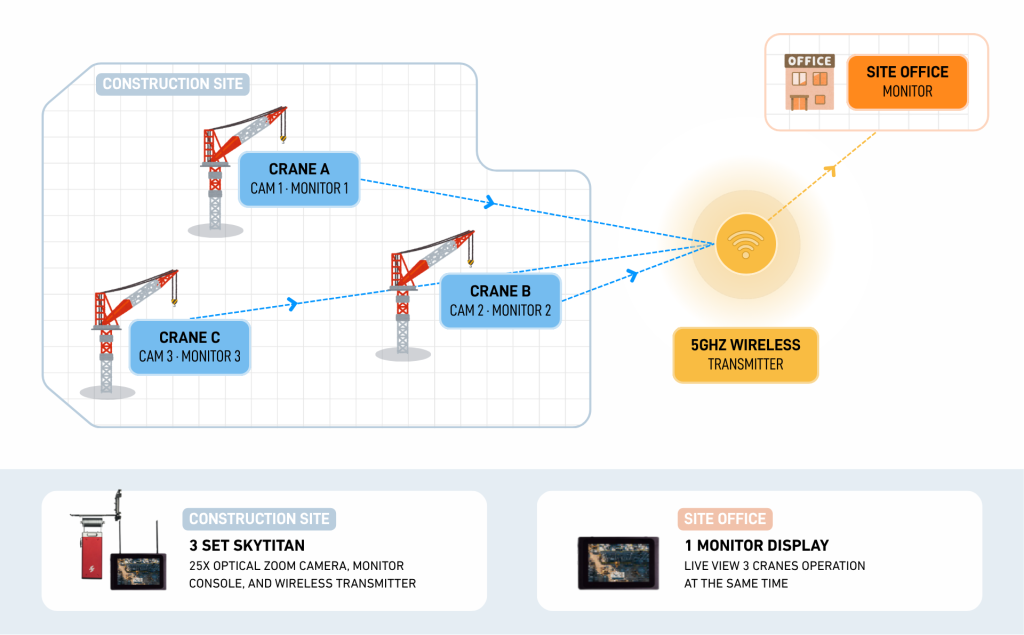
San Ching Engineering deployed 3 sets of SkyTitan across three cranes on site. One complete set per crane, each consisting of a camera mounted on the boom tip, a dedicated monitor console in the cabin, and a 5GHz wireless transmitter. All three camera feeds are transmitted to the site office, where a single monitor display shows all three crane live views simultaneously.
Step 1 — Mount the camera at the boom tip
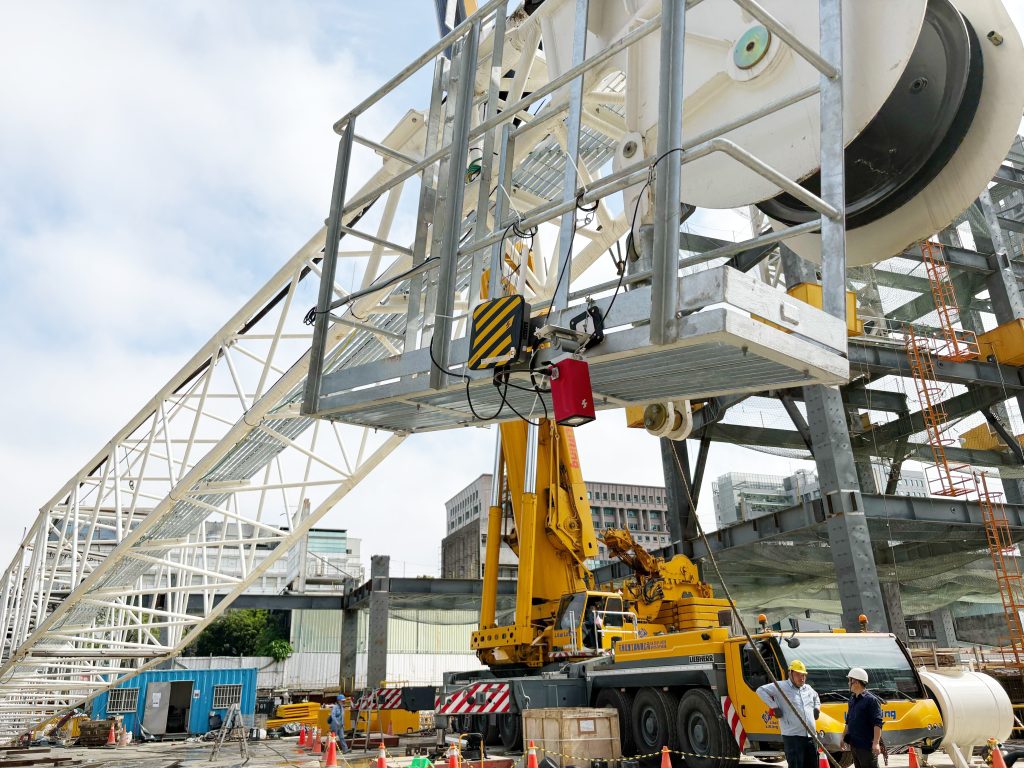
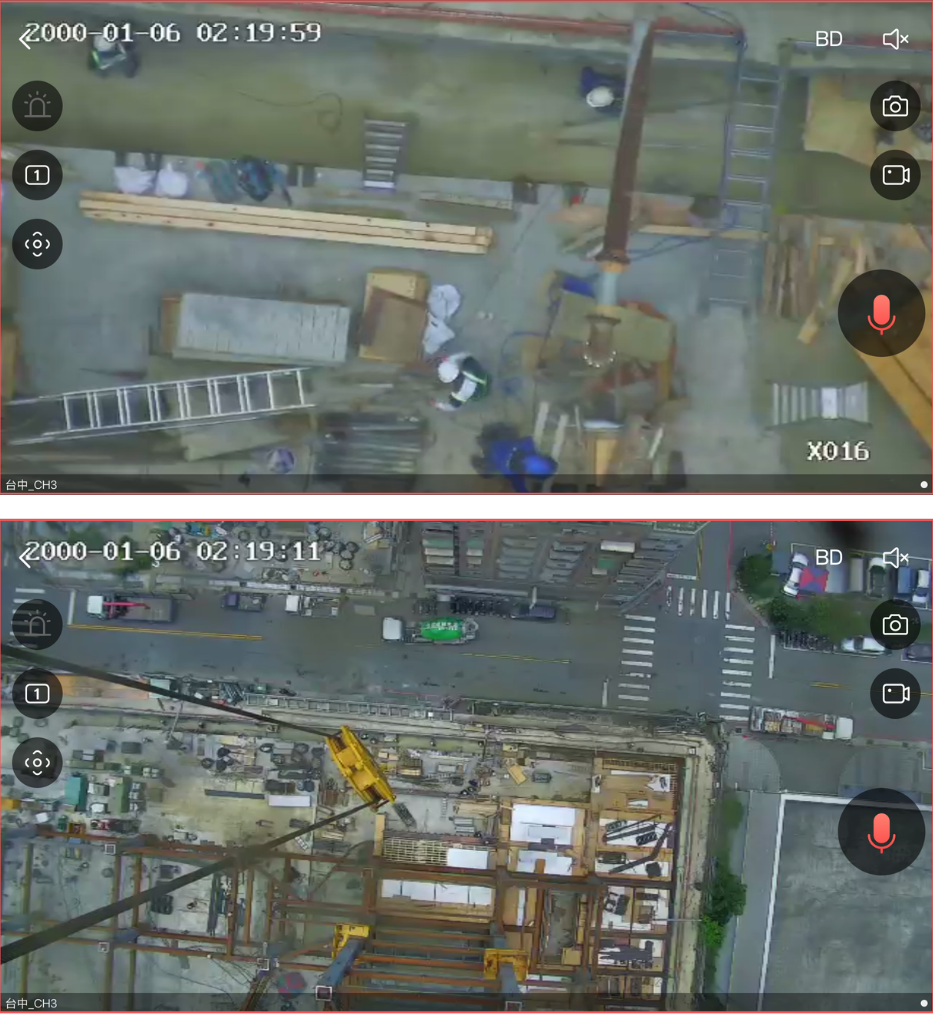
The SkyTitan camera is installed at the tip of the crane boom, at the highest, furthest point from the cabin. This is the position that gives the most complete bird’s-eye view of the loading zone below. With 25x optical zoom, the operator can pull in a close, detailed view of the hook, load, landing target, and everything happening around it. The crane operator in the cabin sees a live feed on a monitor console. Instead of relying on radio calls to know where the load is, they can see it directly.
Step 2 — Wireless access point handles the connection
A dedicated wireless access point is installed and operated on a 5GHz Wi-Fi frequency, for stable video streaming in environments full of heavy machinery and radio traffic. The signal transmitted from the camera to a monitor display at the site office.
Step 3 — Real-time monitoring from site office
The site manager in the office monitors all three cranes on a single monitor display, providing three camera feeds for full crane operation awareness.
Conclusion
With SkyTitan installed, operators could see the loading zone clearly from the cabin — checking hook alignment, load stability, and proximity to other equipment directly on the monitor, without depending on ground crew calls. At the site office, managers had a live view of all three cranes simultaneously on a single display, keeping full oversight of operations in real time.
For construction sites running multiple tower cranes, SkyTitan delivers what matters most. Clear visibility for the operator, and confident oversight for site management. Get in touch to find out how SkyTitan can work on your site.